Background & Scope
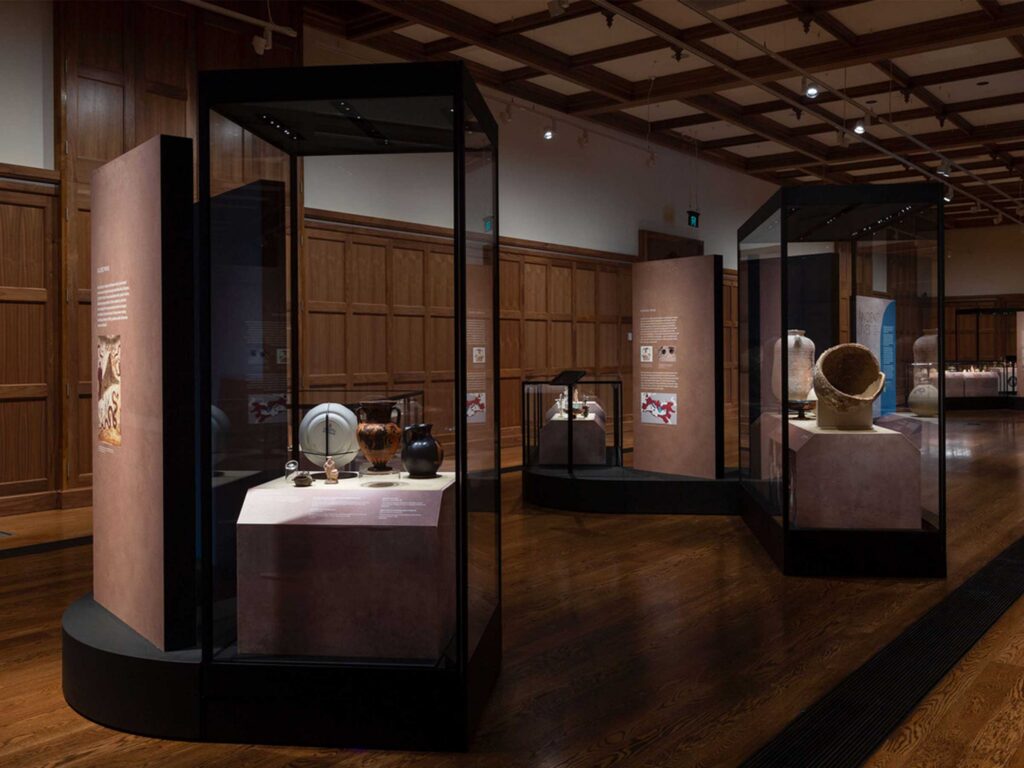
The Old Quad was built in 1856. It is the University of Melbourne’s oldest building and one of the city’s best-known heritage-listed landmarks. Today it serves as a museum and events space, hosting temporary exhibitions drawn from the University’s collections.
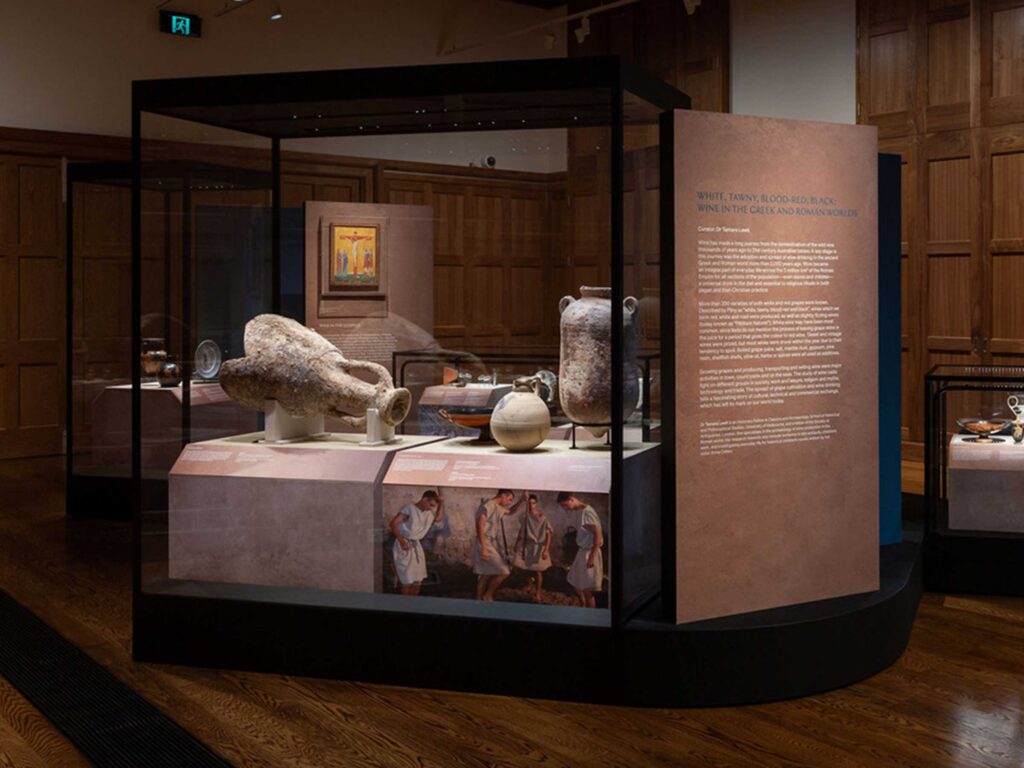
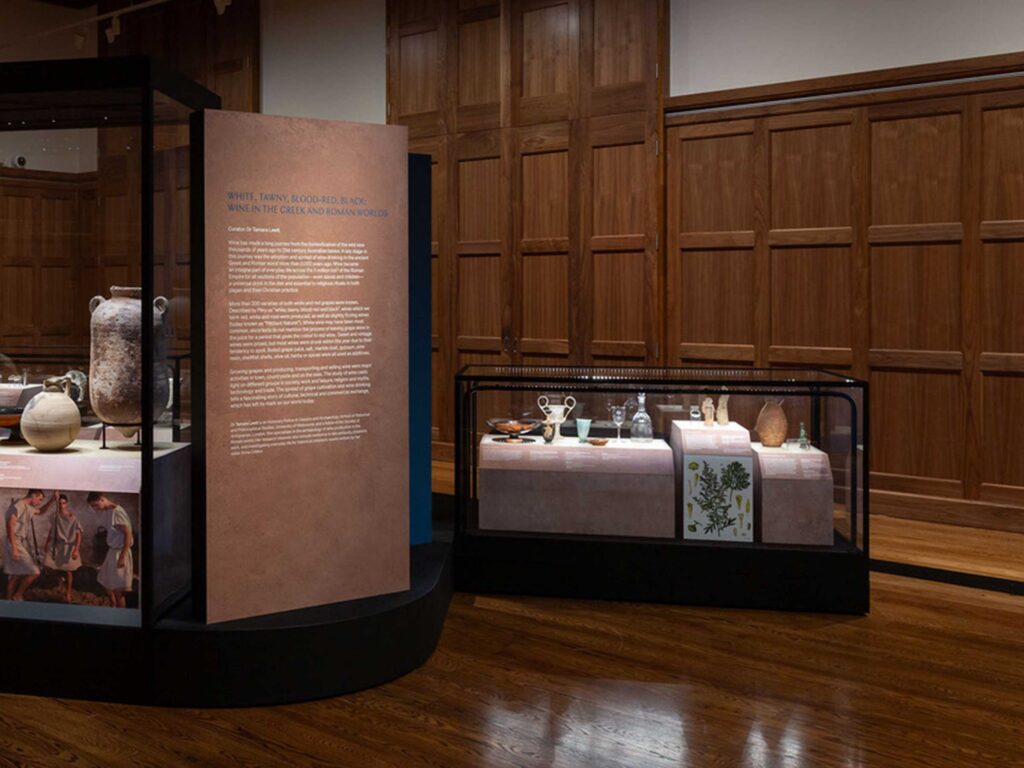
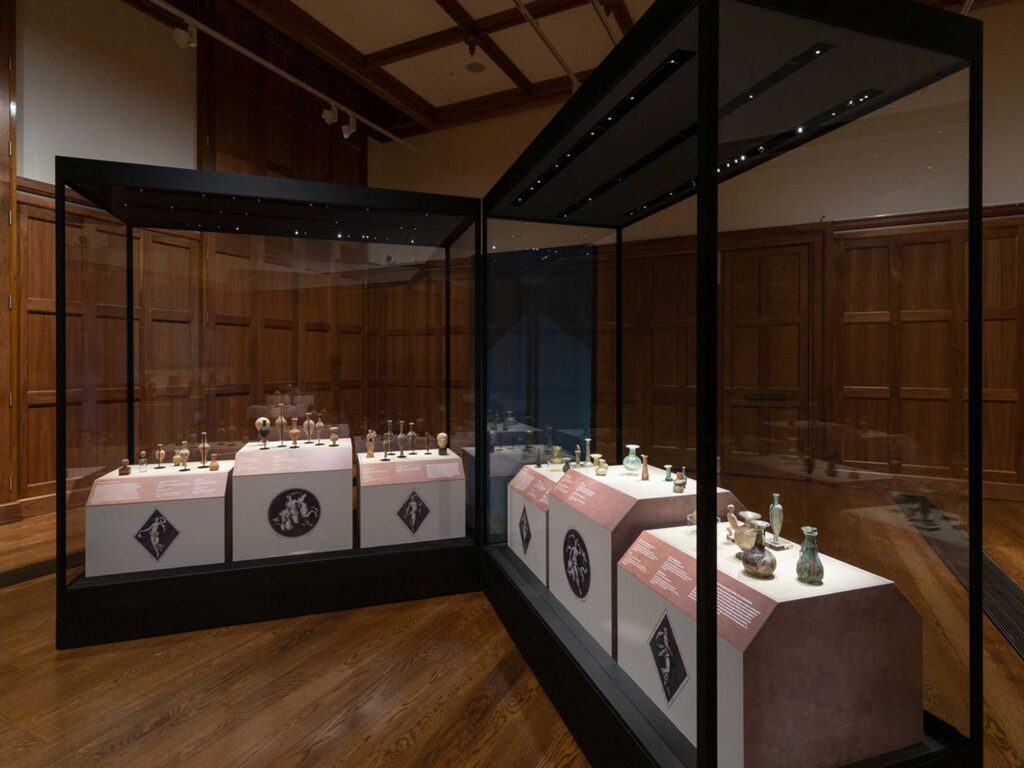
EMT had previously designed and fabricated seven museum showcases for the Old Quad. They are used in rotation, with each exhibition running for six to twelve months, so the showcases are regularly moved, reconfigured and stored. Among the exhibitions shown in them was Ancient Lives: Insights from the Classics and Archaeology Collection, which presented about 100 Greek and Roman objects, including wine amphorae, pottery and vessels.
The brief was to provide museum humidity control inside every showcase. It had to protect fragile artefacts through each exhibition and remain reliable as the cases moved between gallery and storage.
Why Relative Humidity Matters for Ancient Artefacts
Archaeological ceramics often carry soluble salts absorbed during centuries underground. When humidity rises and falls, these salts dissolve and recrystallise, which can flake glazes and weaken surfaces. Organic materials such as wood, bone and plant fibre swell and shrink with every change, while metals corrode faster in damp air.
A heritage hall with timber panelling, visitors and changing seasons cannot hold a constant humidity. A sealed showcase can. Museum humidity control therefore works best at the scale of the individual case, where the conditions around the objects can be set and held precisely.
Sizing the miniClima Units to Each Showcase
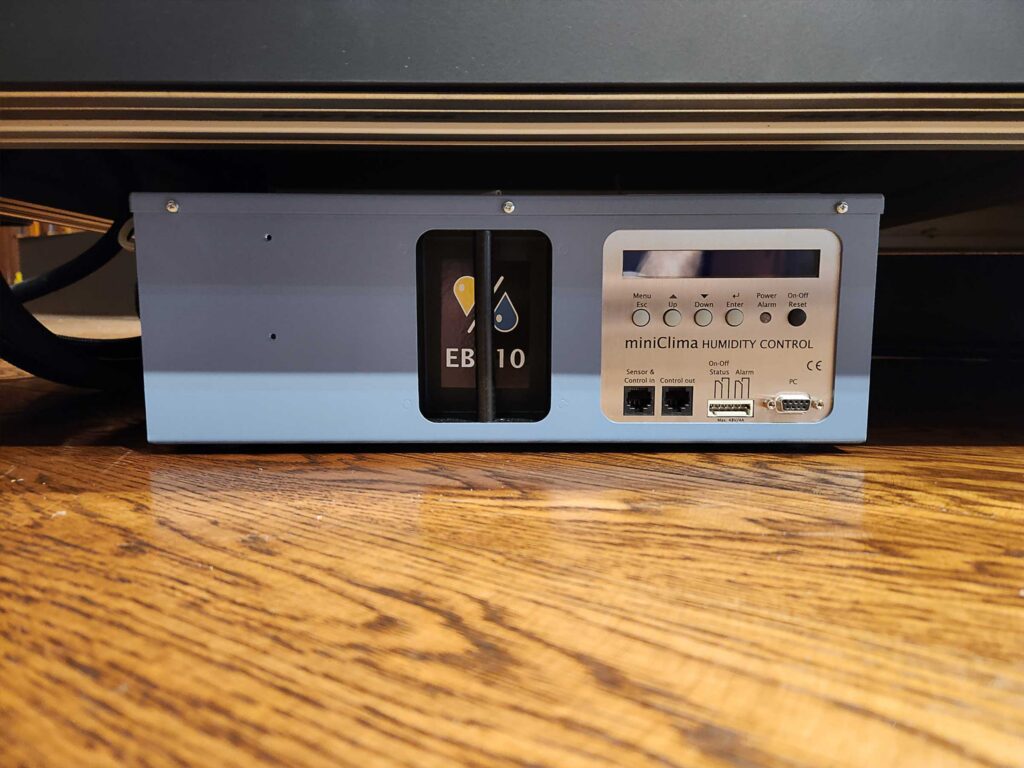
EMT fitted active miniClima constant humidity units, which both humidify and dehumidify as required. The model chosen depends on the volume of air inside each display. The range runs from the compact water-free EBCeasy, for cases up to about half a cubic metre, to the EBC 12 for volumes of up to about 10 m³. At the Old Quad, EBC 10 units, rated for up to about 3 m³, sit discreetly beneath the showcases.
Each unit connects to its case through flexible hoses, forming a closed loop that circulates air continuously. A digital sensor inside the showcase measures relative humidity and temperature. The unit corrects the humidity gradually, without changing the air temperature.
Adjustable Settings, Alarms and Data Logging
The target humidity can be adjusted anywhere between 30 and 75 per cent relative humidity. Conservators can therefore match the conditions to the objects in each new exhibition. A front-panel display shows the current reading. If humidity moves outside preset limits or a fault occurs, the status light turns red and an alarm is raised.
Every unit includes a built-in data logger. Readings can be downloaded to a computer, giving the University a continuous record of conditions inside each case.
Servicing and Recalibration