Spatial Harmony and Invisible Conservation
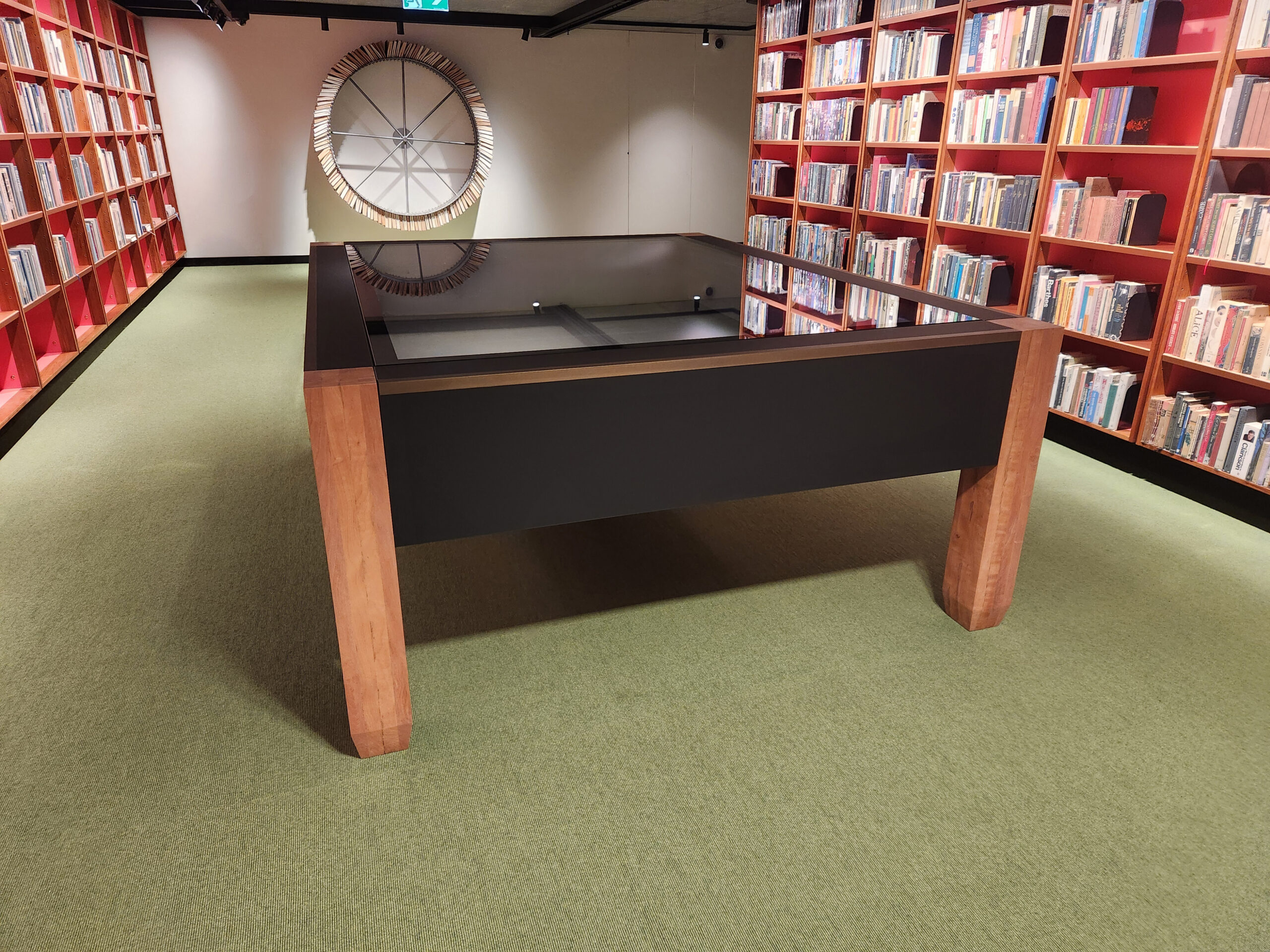
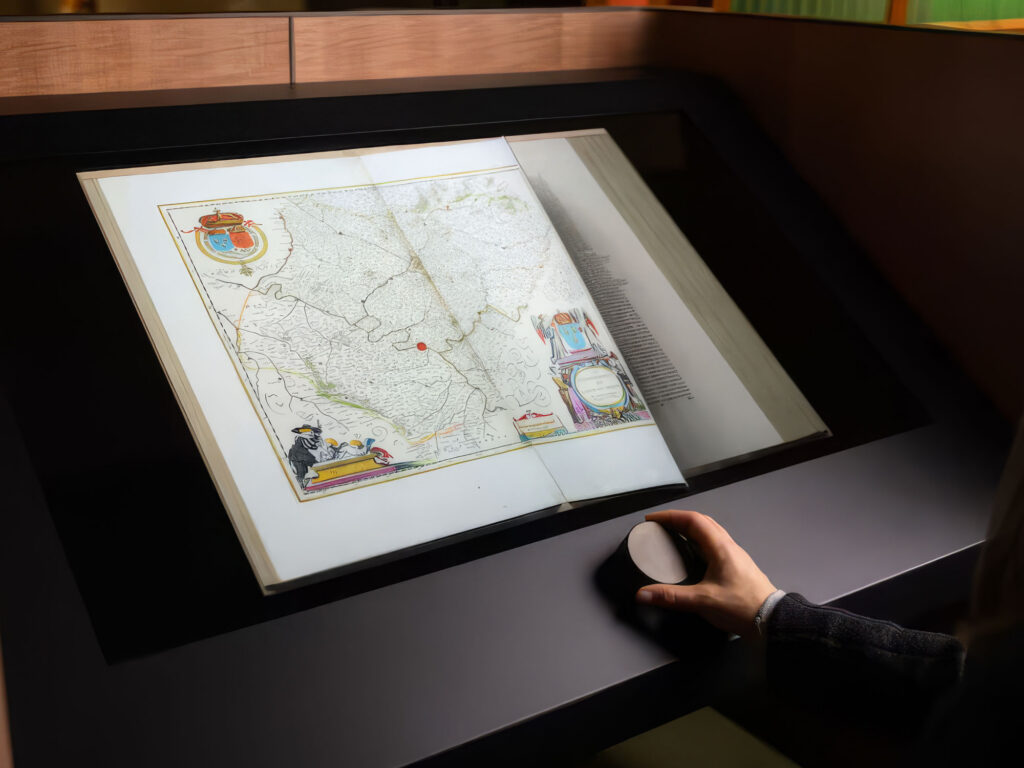
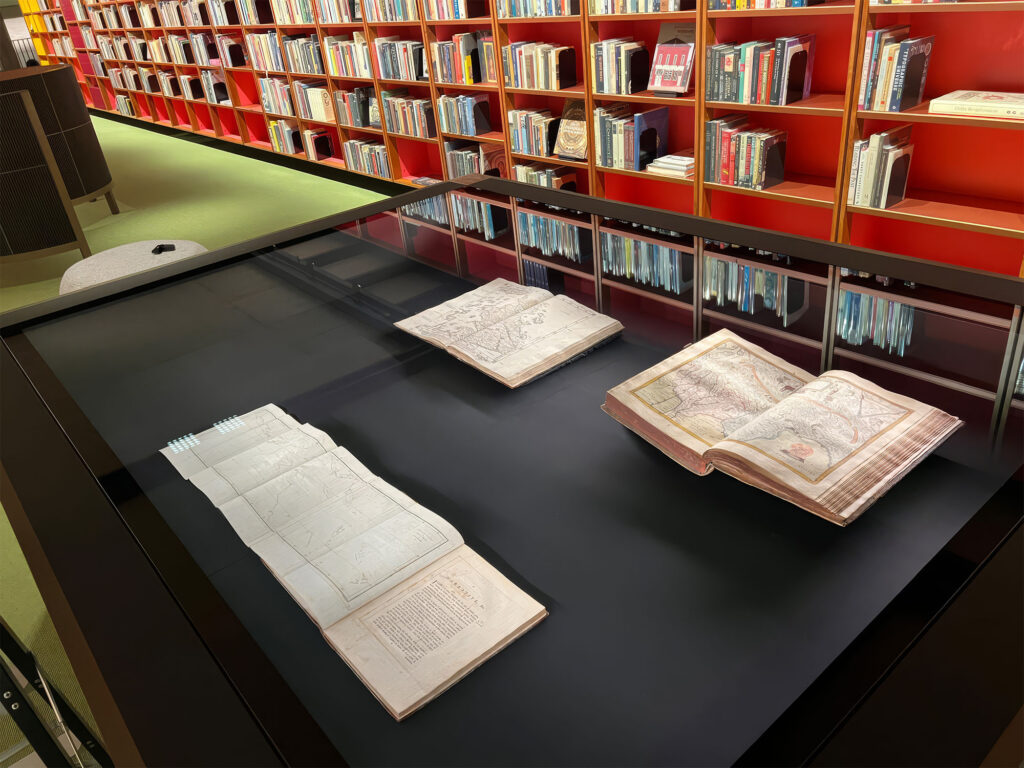
Situated within the dedicated map room of the Phrontisterion library, the freestanding map case provides an elegant horizontal plane for examining historical cartography and rare, oversized folios. This showcase integrates conservation engineering with a refined material profile that beautifully echoes the room’s rich timber tones and subterranean character.
The understated exterior structure features an expansive viewing area nearly two metres long, offering absolute visual clarity through a protective, low-iron glass canopy. European Museum Technology integrated a discreet conservation lighting system along the long interior edges. Completely concealed beneath a perimeter paint mask, these elements eliminate glare and protect sensitive historic parchment from direct heat exposure.

Kinematic Access and Modular Assembly
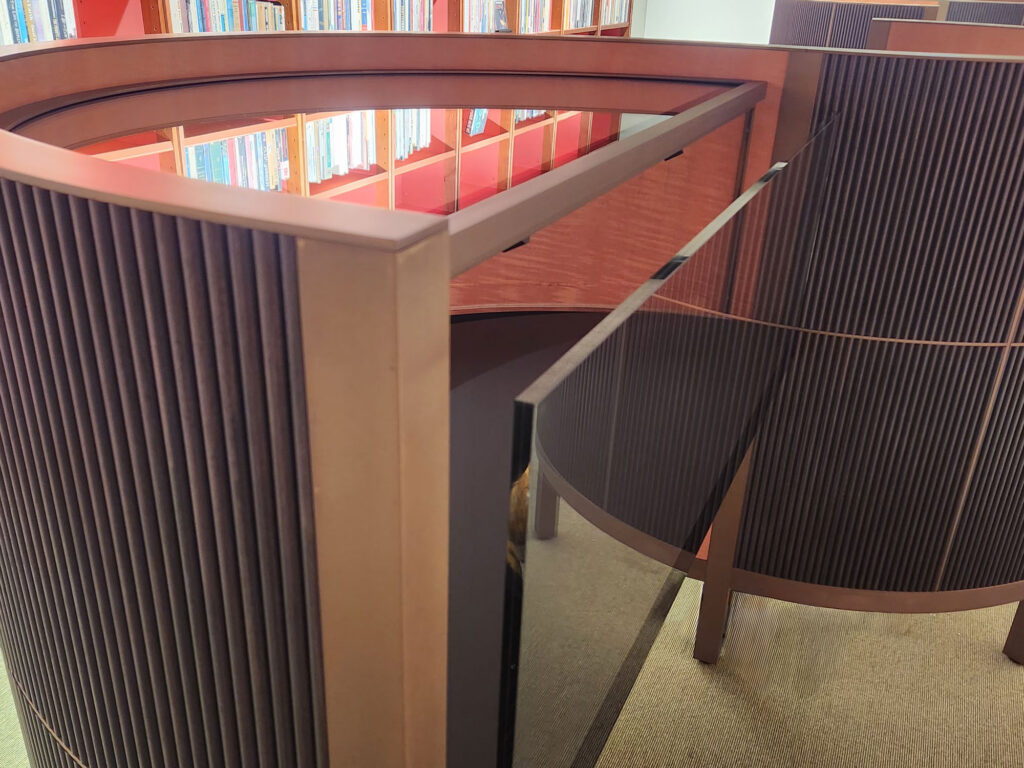
Accessing the delicate materials inside requires an inventive mechanical sequence designed to ensure both security and ease of curation. While the top glass remains a fixed panel, access to the internal display area is controlled by an electronic locking system on each side of the table. Once released, a concealed side panel hinges downward from the base, allowing an internal storage and display cassette to slide out smoothly. This arrangement offers curators generous vertical clearance to arrange, adjust, and swap heavy atlases without disturbing the primary glass envelope.
The engineering behind the table balances this substantial presence with a highly considered modularity. To facilitate seamless transport and precise installation within the subterranean library, the entire structure is fully disassemblable into individual components, ensuring that no single segment exceeds manageable weight limits during transit. This approach allowed the massive installation to be reassembled in situ with absolute dimensional accuracy.
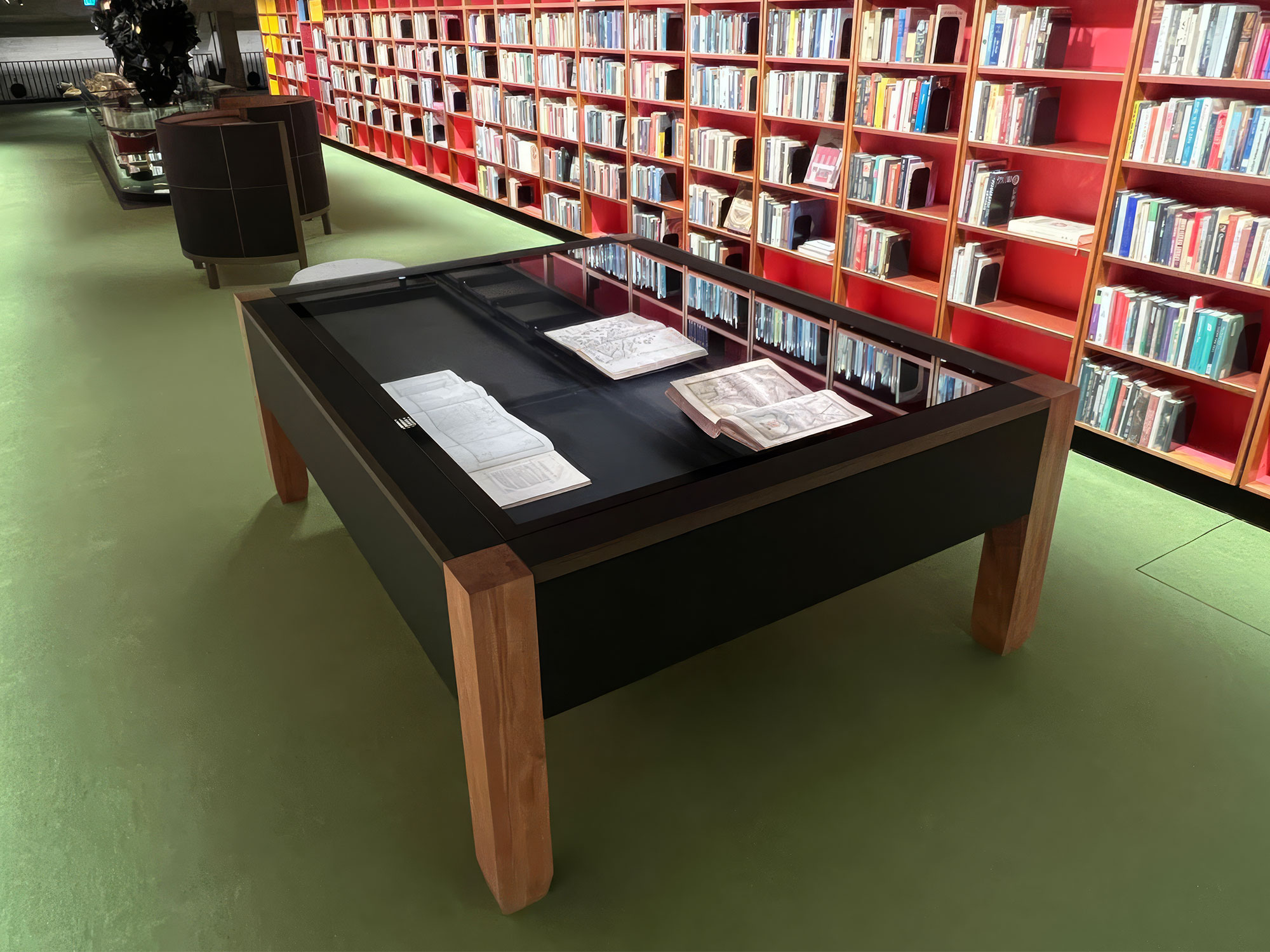
The finished map case in the Phrontisterion library, displaying rare folios under a protective glass canopy.
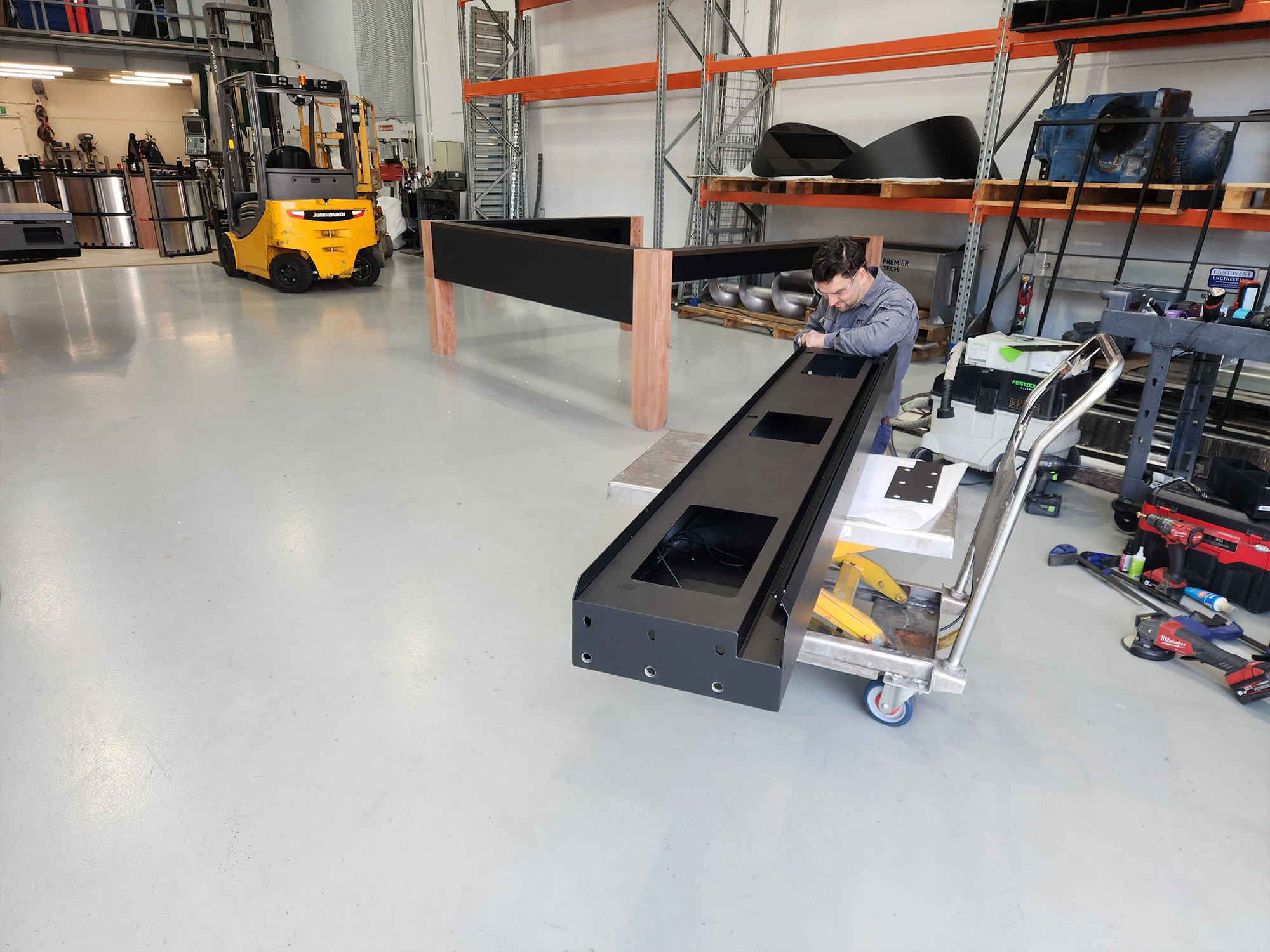
Pre-assembling the modular components in the workshop to ensure they could be easily moved into the library.
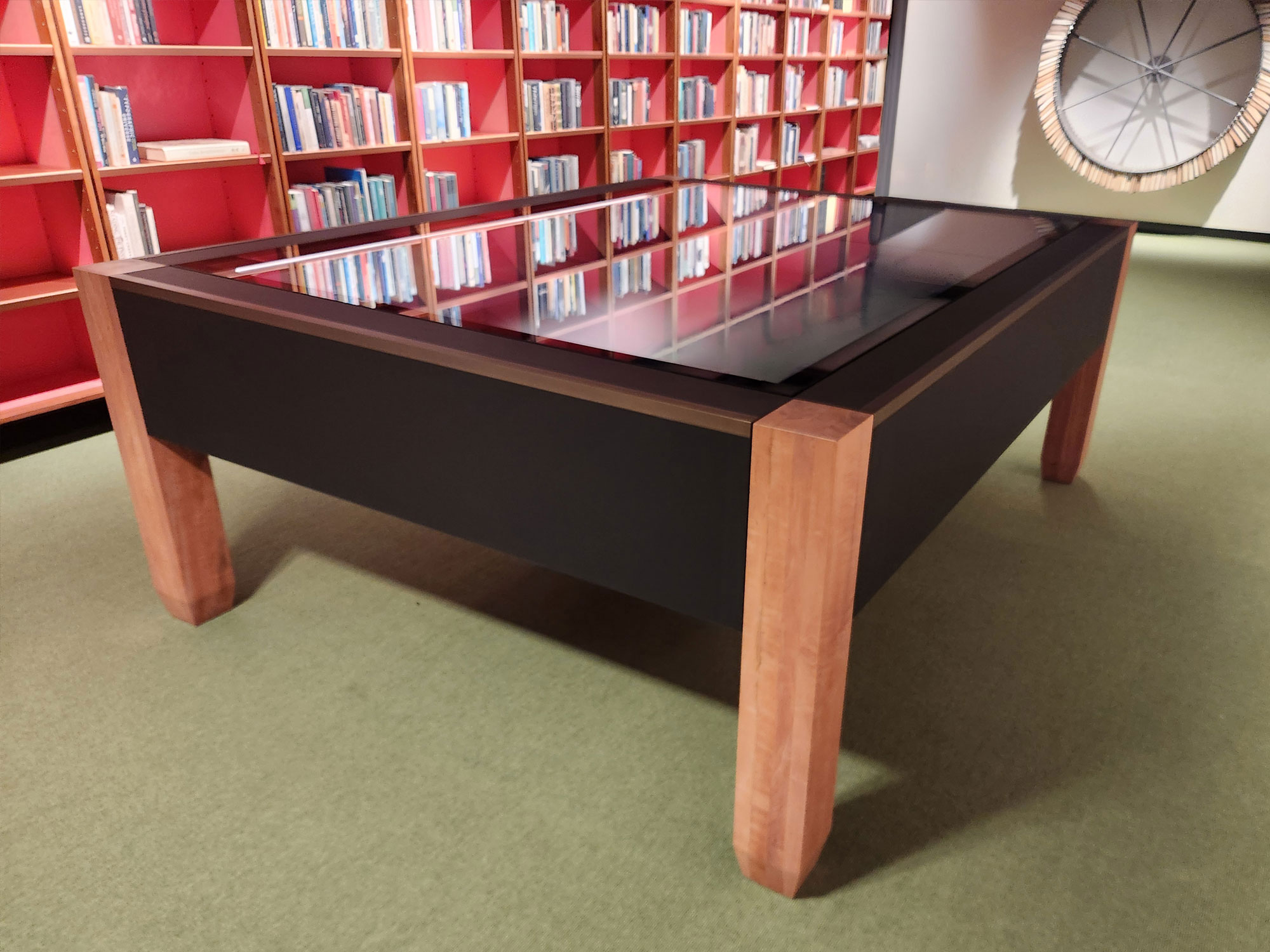
The completed table in position, showing the timber legs and the slide-out cassette system designed for swapping heavy books.