Digital Retrieval Units: Mechanical Interaction

Gallery: The Museum of Old and New Art (MONA)

Location: Hobart, Tasmania, Australia

Project: Phrontisterion Library: The House of Kiefer

European Museum Technology

Digital Retrieval Units: Mechanical Interaction

Bridging digital scholarship and tactile materiality through a bespoke mechanical interface.

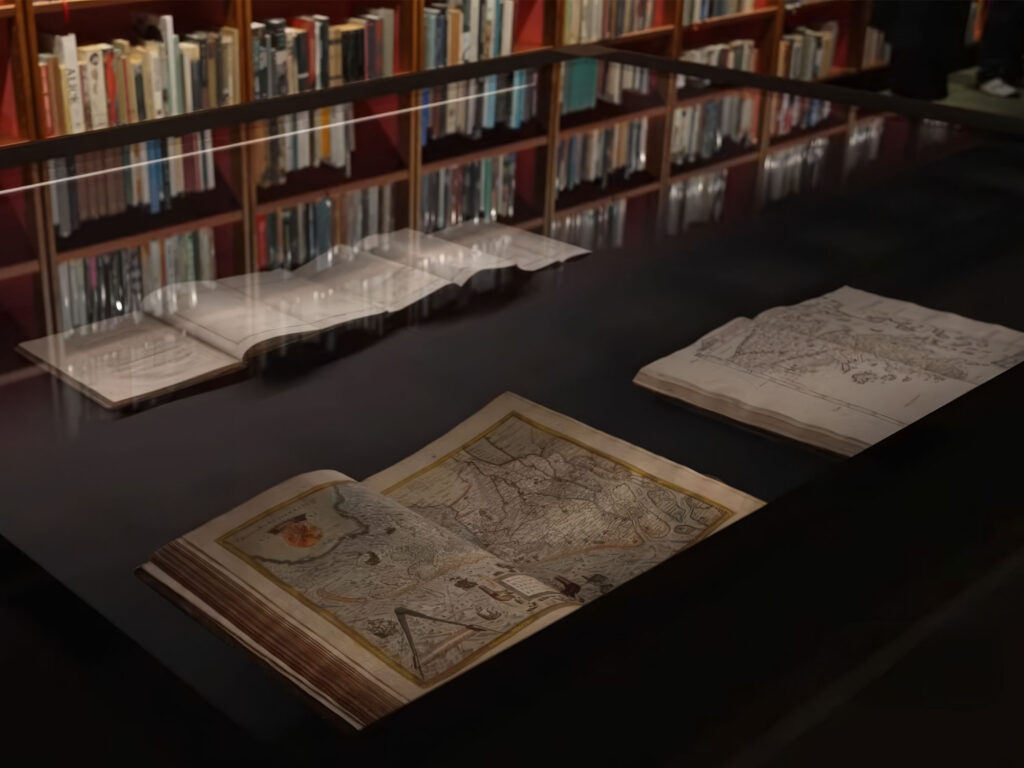
Positioned alongside high-security vitrines, these semi-circular timber capsules allow interactive, full-scale exploration of fragile archives without physical handling. Featuring an angled display screen and a single weighted brass dial, the consoles ground digital navigation in a reassuringly tactile interface, while fully concealing all internal infrastructure to preserve the quietude of the library.

Curatorial Access and Interactive Scholarship
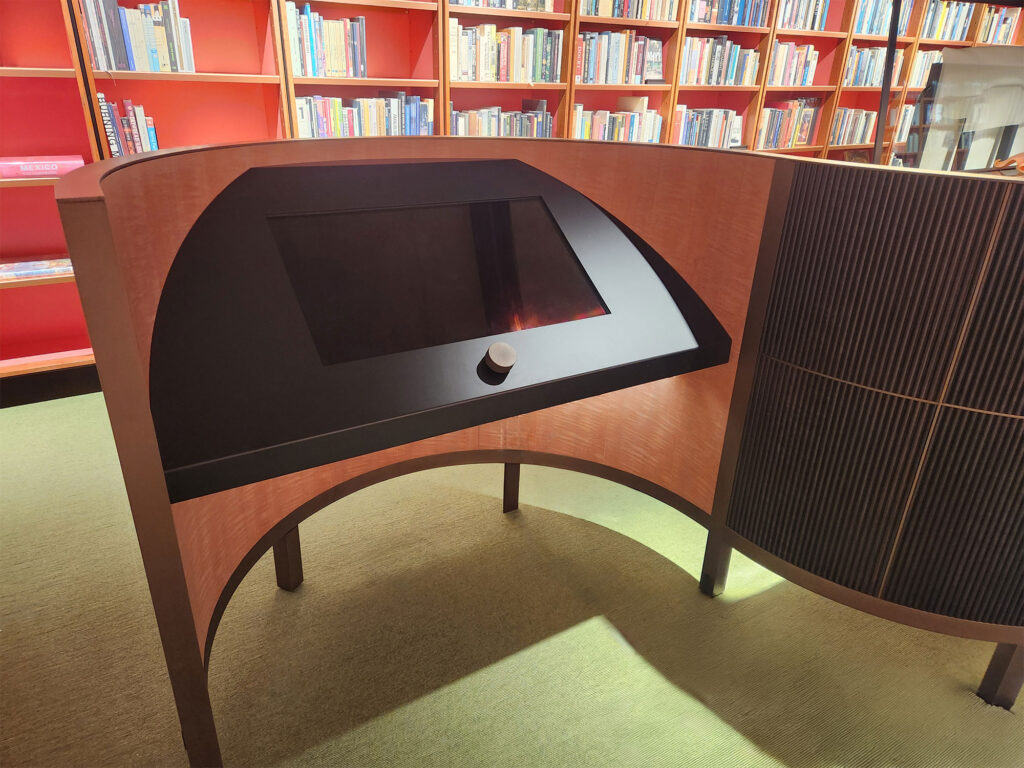
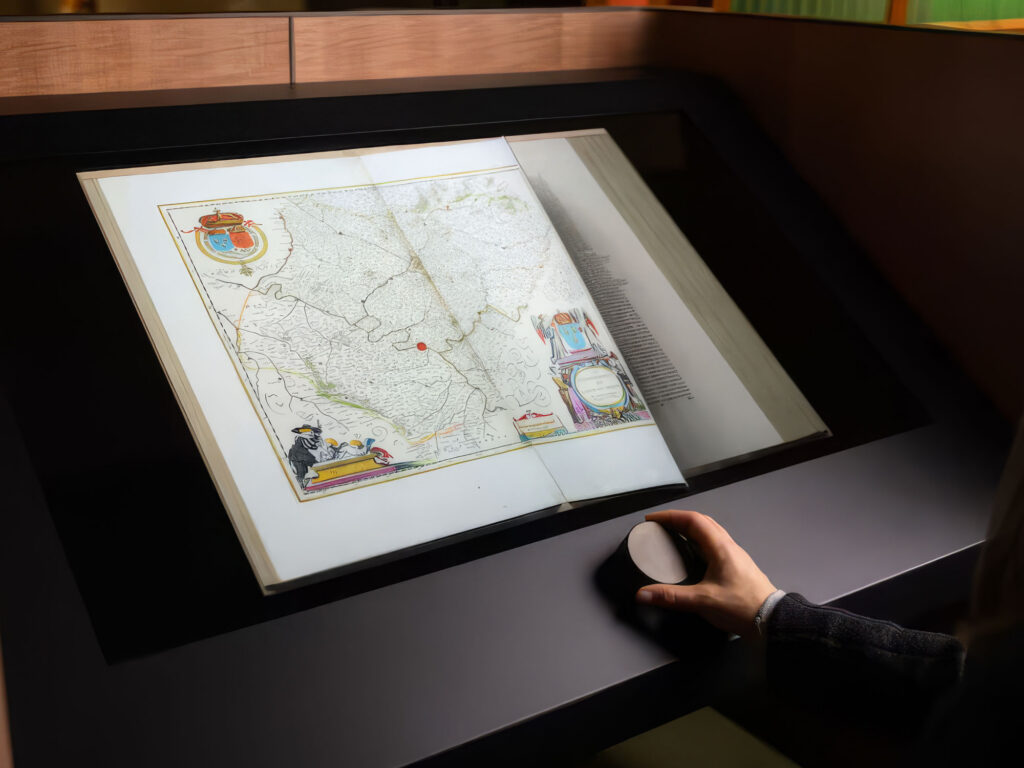
The digital retrieval units, known colloquially as the dial stations, introduce an elegant interface for interactive scholarship within the library space. Each unit comprises a semi-circular timber desk capsule housing an integrated angled display screen. Placing these stations directly alongside the high-security vitrine allows visitors to explore the digital content of the Shakespeare and Picasso volumes at exact scale, while protecting the fragile physical artefacts from direct handling.
Digital Retrieval Units: Mechanical Interaction
Ergonomic Materiality and System Integration

Ergonomic Materiality and System Integration

The capsule functions as a self-contained, ergonomic study console. The dark, inset screen plane creates a flush canvas that contrasts with the warm, continuous grain of the surrounding timber fascia. A solitary, weighted brass knob sits low on this console plane, serving as a sculptural focal point. This mechanical control grounds the digital interaction in a tactile, traditional materiality, enabling researchers to turn the virtual pages with deliberate physical feedback.

To preserve the clean architectural profile of the Phrontisterion library, the structural body of the timber capsule completely conceals all internal component wiring, hardware links, and power distribution systems. This clean internal management keeps the surrounding floor space entirely clear, preserving the tranquil character of the gallery environment.