Background & Scope
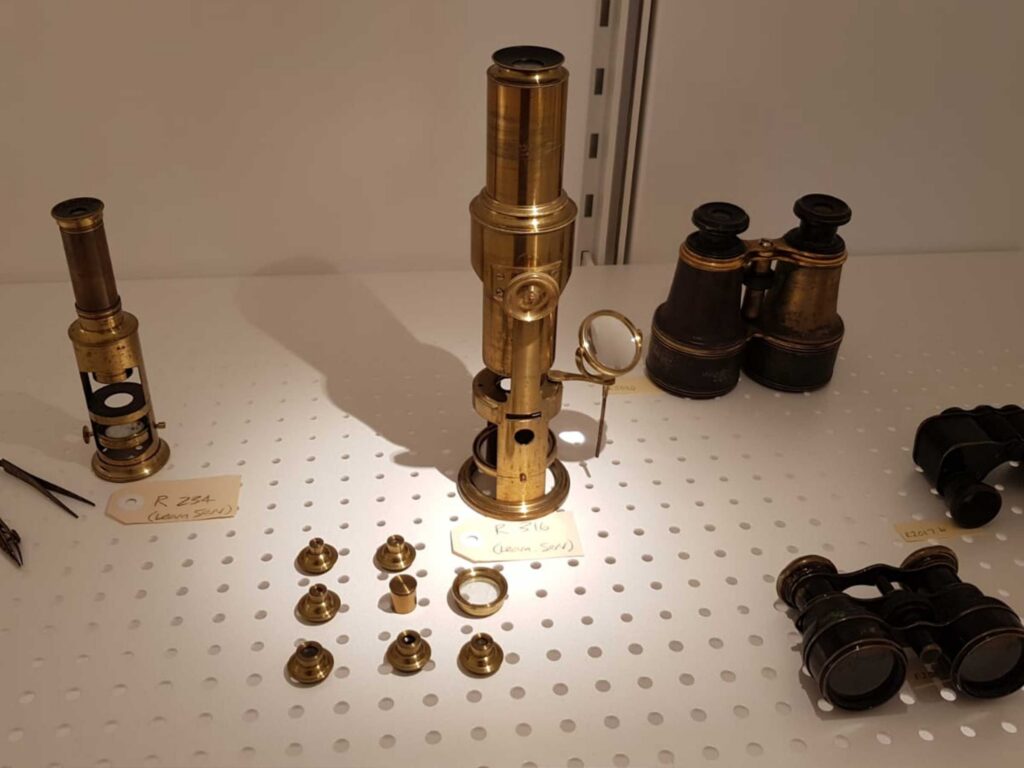
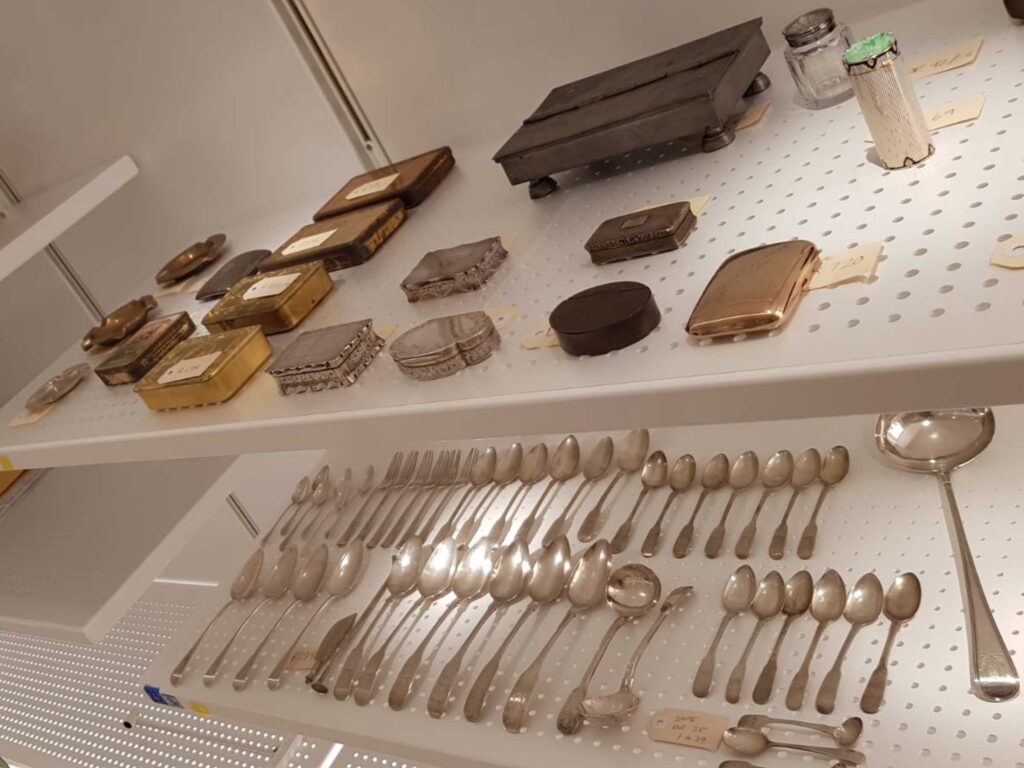
The State Library of New South Wales began as a subscription library in 1826 and is the oldest continuously operating library in Australia. Its collection of around six million items includes manuscripts, paintings and photographs. It also holds a significant body of objects, among them coins, medals and silverware.
In 2018 the Library completed its first major building project in the heritage Mitchell Building in more than 50 years, almost doubling its exhibition space. That year European Museum Technology fabricated a series of display cases for the Library, each with miniClima display case humidity control fitted from the outset. The units have now been in continuous operation since 2018.
Why Humidity Matters for Metal Objects
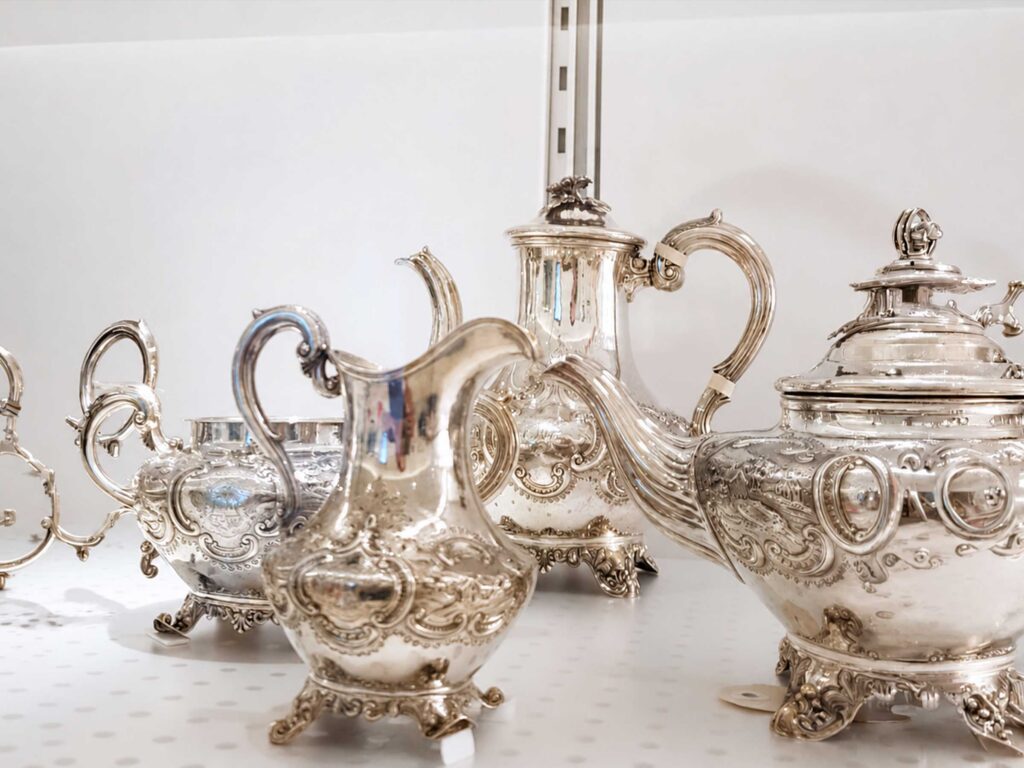
Metals react with moisture in the air. Iron and steel rust. Brass and other copper alloys can develop active corrosion, particularly where salts are present. Silver tarnishes when it reacts with sulphur compounds in the air, and moisture speeds up that reaction.
Conservators therefore generally keep metal collections dry, often below 40% relative humidity, and above all stable. Sydney’s coastal climate makes this difficult to achieve with building air conditioning alone. Display case humidity control solves the problem by managing the air inside each case independently of the gallery.
Integrating miniClima Units into the Plinths
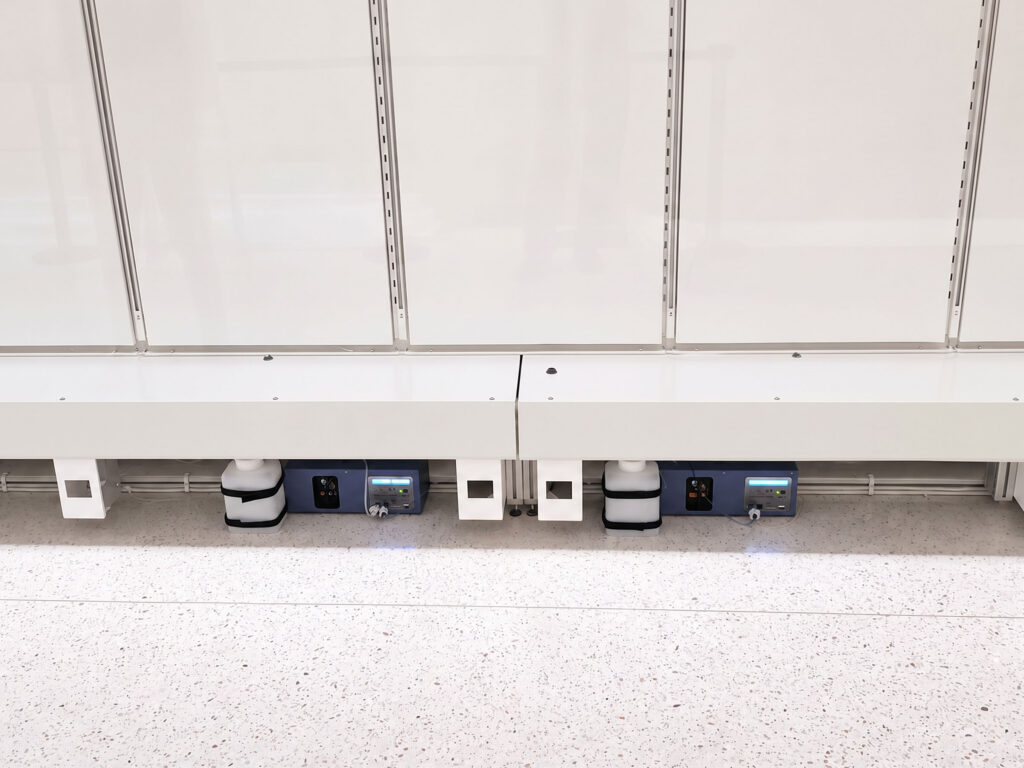
EMT specified miniClima constant humidity units, manufactured in Austria, and housed them within the plinths beneath each case. This keeps the equipment out of sight and leaves the vitrine above uninterrupted. It also allows servicing without opening the display or disturbing the objects.
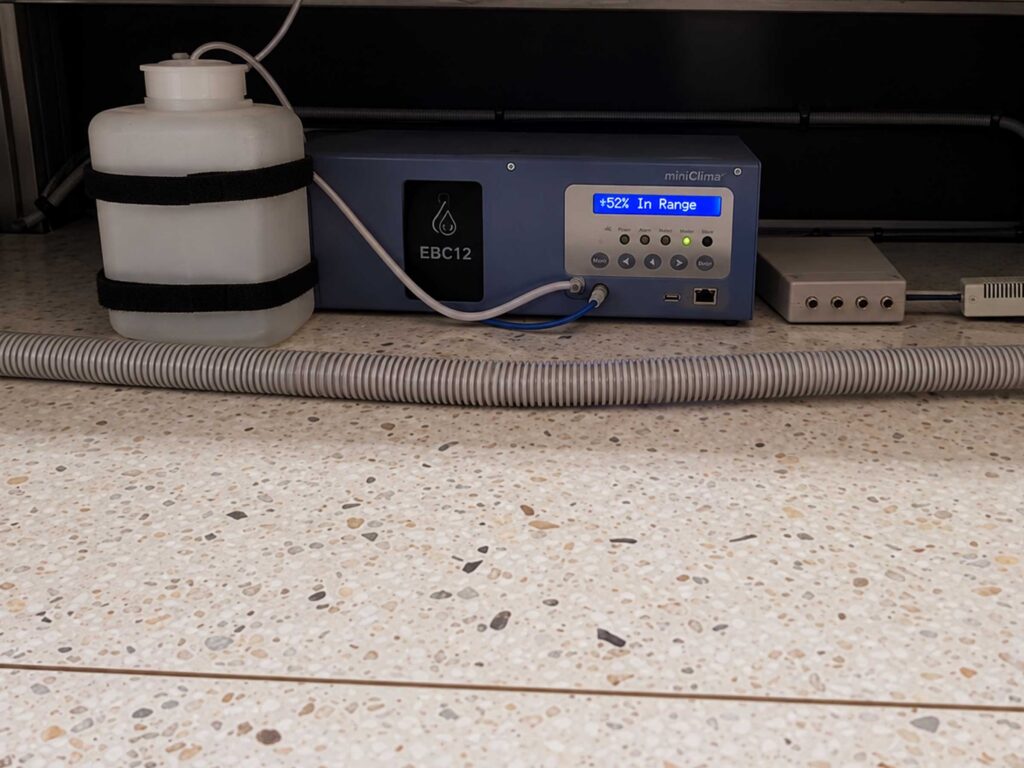
Each unit connects to its case through flexible hoses and sealed screw fittings. Together they form a closed air circulation loop. A digital temperature and humidity sensor is placed inside the case so the unit responds to conditions at the objects themselves, not in the plinth.
The system performs best when the case is well sealed. The less outside air that leaks in, the more stable the microclimate and the less work the unit has to do. Because EMT fabricated both the showcases and the plinths, the joints, hose routes and service access could be designed together from the outset.
How the miniClima System Works
The unit circulates air continuously between the plinth and the case. It removes or adds moisture as needed to hold a set humidity level, adjustable between 30% and 75% relative humidity. It approaches the setpoint gradually and does not change the air temperature. This avoids sudden shifts that could stress sensitive materials.
Units can be linked in master and slave chains to serve larger volumes. Each unit can take either role, which gives the Library flexibility when exhibitions are rearranged.
Monitoring, Alarms and Long-Term Care
Each unit has a built-in data logger, and conditions can be reviewed on a computer using miniClima’s software. If humidity moves outside the preset limits or a sensor fault occurs, a status light turns red and an optional audible alarm sounds. The units can also be wired into the building’s security or management system, so alarms are seen centrally as well as at the case.
The manufacturer recommends a general factory inspection every two to three years, depending on the model. Combined with continuous logging, this gives the Library’s conservation staff a documented record of the conditions around each object.