

Background & Scope
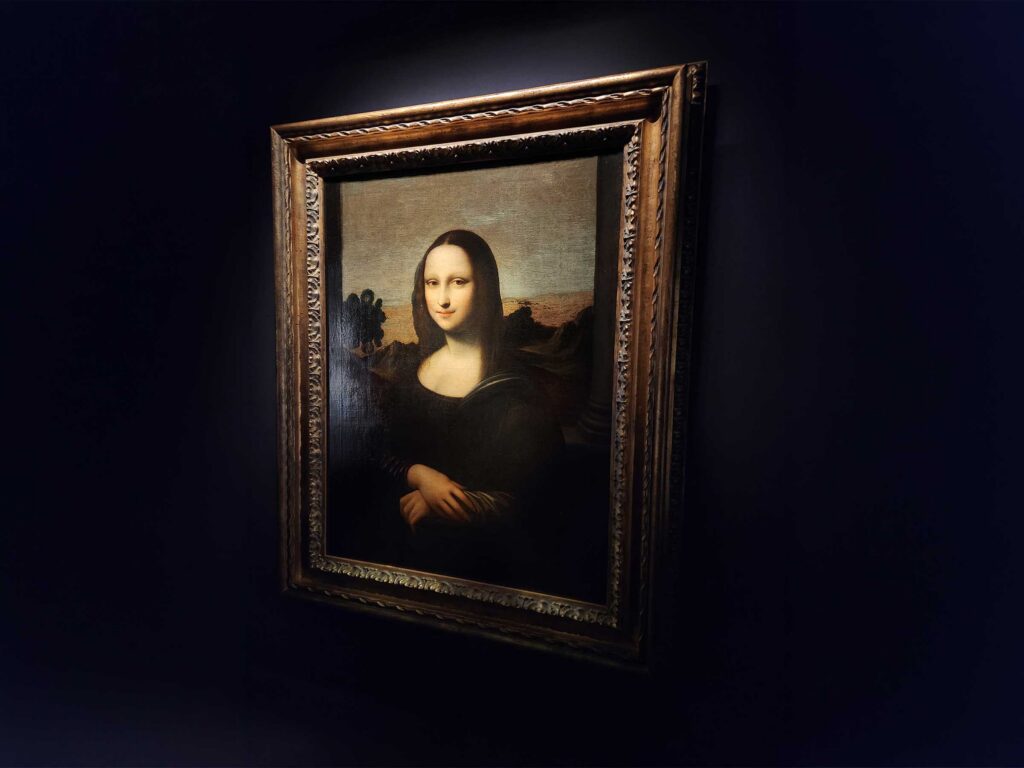
The Mona Lisa Foundation is a Swiss non-profit based in Zurich. It researches the earlier version of Leonardo’s portrait, known historically as the Isleworth Mona Lisa, and presents it to audiences around the world. The Foundation dates the painting to some ten years before the Louvre portrait. The tour has taken it to Singapore’s former Parliament building in 2014–15, to Shanghai in 2016, to Florence’s Palazzo Bastogi in 2019 and to the Promotrice delle Belle Arti in Turin in 2023–24.
European Museum Technology (EMT) designed and built both the painting’s travel case and its demountable exhibition showcase. This case study covers one part of that work: humidity control for paintings on display, provided by a miniClima system built into the showcase.

Why Humidity Matters for a Painting on Canvas
The Early Mona Lisa is painted in oil on canvas. Canvas and its ground layers take up moisture from the air and release it again, so they expand and contract as humidity rises and falls. Repeated swings can loosen paint and cause cracking. Gallery conditions vary widely from one venue to the next, and visitor numbers raise and lower humidity through the day. For a work that moves from venue to venue, stable humidity is one of its most important protections.
During transport the painting travels in EMT’s sealed travel case, which uses passive humidity buffering, so it needs no power. Once the painting is on display, the showcase takes over with active control. It continuously measures the air around the painting and corrects it as needed.
A Sealed Showcase Built for Climate Control
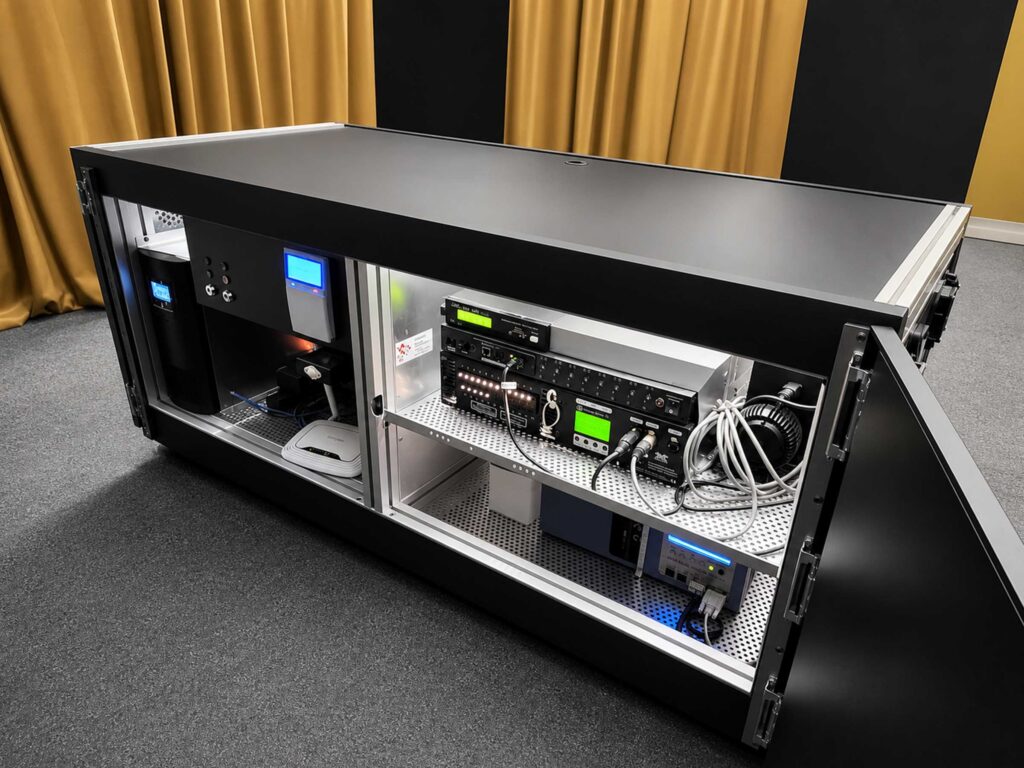
Active humidity control works only in an airtight case made from non-porous materials. EMT built the showcase as a sealed enclosure with security glazing, so that the miniClima system conditions only the air around the painting and never the room. The case can be taken apart into components for transport and rebuilt at each venue by EMT technicians.
EMT chose the miniClima EBC12, the largest unit in the EBC range, rated for cases of up to about 10 m³. That capacity lets the unit reach and hold its setpoint without strain. It is housed in the showcase plinth, out of sight of visitors.
The EBC12 controls humidity by condensation and evaporation. It draws on a 2 litre bottle of distilled water to add moisture and collects the condensate it removes. Flexible hoses link the unit to the display chamber to form a closed air circulation loop. A digital sensor inside the case measures relative humidity and temperature. The unit then adds or removes moisture to keep the case at the conservator’s chosen setpoint, anywhere between 30% and 75% relative humidity. The unit leaves the air temperature unchanged. It runs silently and keeps the air circulating gently at all times.

Monitoring, Alarms and Data
The front-panel display shows the current humidity and what the unit is doing. A built-in data logger records humidity and temperature over time, giving a continuous record of conditions inside the case. The unit raises an alarm if humidity moves outside its set limits, if a sensor signal is lost, or if the water bottle reaches its high level. When that happens, the status light turns red, so staff can respond before conditions drift.
Because the climate system is built into the plinth, it travels as part of the showcase. At each venue it is reconnected and recommissioned on site, so conditions in the case are stable before the painting is installed.


